Solo and Thriving: The Quiet Power of Keeping Your Creative Work to Yourself
Somewhere along the way, "collaboration" became a virtue signal. You hear it in every podcast, every creative workshop, every LinkedIn post written by someone who just wrapped a six-person brand shoot: community is everything, no one creates in a vacuum, your network is your net worth. And look — none of that is wrong, exactly. But it's not the whole story either.
Because here's what nobody's saying out loud: for a lot of creators, the constant gravitational pull toward collaboration is quietly eating their best work alive.
The Myth of the Creative Hive Mind
There's a cultural story we've been sold — especially in the US, where hustle culture and "building together" have basically merged into a single religion — that the most innovative, most compelling creative output comes from rooms full of people bouncing ideas off each other. Open offices. Brainstorm sessions. Shared Google Docs with seventeen comment threads.
Except when you look at the work that actually moves people, a surprising amount of it came from one person sitting alone with a weird obsession and enough uninterrupted time to follow it somewhere interesting.
Stanley Kubrick was famously difficult to collaborate with — and also one of the most visually coherent filmmakers who ever lived. Prince recorded entire albums by himself, playing every instrument, because he didn't want anyone else's instincts muddying his. Radiohead's Thom Yorke has talked openly about how his solo work gave him a creative freedom that even a beloved band couldn't provide. These aren't anomalies. They're a pattern.
What Gets Lost in the Room
Here's the thing about collaboration that nobody puts in the pitch deck: every person you add to a creative process brings their own taste, their own anxieties, and their own sense of what "good" looks like. Sometimes that friction is generative. Sometimes it just sands down the edges of your idea until it's smooth enough for everyone in the room to feel comfortable — which is a very different thing from being good.
Group dynamics in creative settings tend toward consensus. And consensus, by definition, is a negotiated middle ground. If your work lives in the middle ground, it's going to feel like it. Audiences can tell when something was designed by committee. There's a particular kind of blandness that comes from a project where everyone had a say, and it shows up in the final product like a watermark.
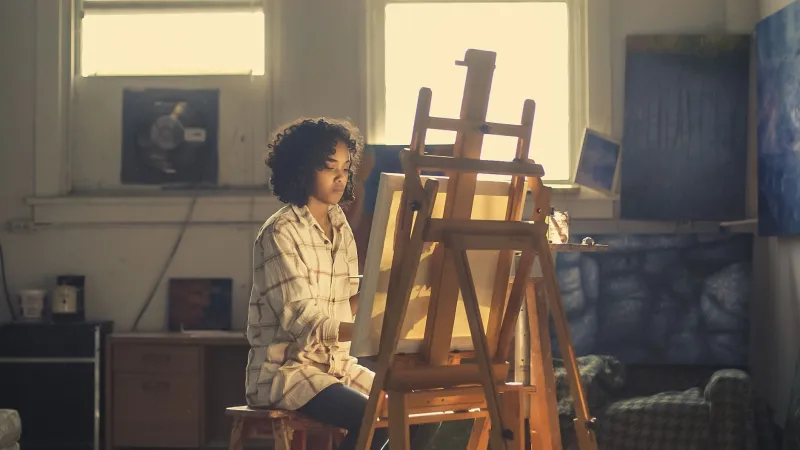
Solo work doesn't have that problem. The voice stays consistent because there's only one voice. The decisions stay weird because there's no one to talk you out of them.
The Speed Argument Nobody's Making
Beyond artistic coherence, there's a practical case for going solo that gets buried under all the collaboration hype: you are faster when you work alone.
Not always — some projects genuinely need multiple skill sets and can't be done by one person. But for a huge swath of creative work, the bottleneck isn't capability. It's coordination. Every collaborator you bring in adds scheduling friction, communication overhead, and decision latency. You go from "I had an idea this morning and shipped it by noon" to "let me loop in the team and we'll circle back next week."
For independent creators especially, speed is a competitive advantage. The ability to move from impulse to output without running it through a filter is something that bigger, more collaborative operations genuinely cannot replicate. That's your edge. Giving it up in the name of community isn't noble — it's expensive.
Knowing When the Room Actually Helps
None of this is an argument for becoming a hermit or turning down every collaboration that comes your way. Some projects are structurally collaborative and that's fine — a film needs a crew, a brand campaign needs a team, a magazine needs editors. The point isn't that collaboration is bad. The point is that it's not automatically good, and treating it like a default setting is costing a lot of solo creators their best work.
A useful framework: ask yourself whether the collaboration is filling a genuine gap in your skills or access, or whether it's filling an emotional gap — the discomfort of uncertainty, the fear of making the call yourself, the desire to have someone to share the blame with if it doesn't land. The first kind of collaboration makes your work better. The second kind makes you feel better while quietly diluting what you're making.
Also worth asking: does this collaboration require you to explain and justify decisions that you'd otherwise just make? Because every hour you spend building consensus is an hour you're not spending building the thing.
Protecting Your Momentum Like It's a Resource
Creative momentum is real and it's finite. When you're in a flow — when a project has its own internal logic and you can feel where it's going — that state is genuinely fragile. A single meeting where someone raises a concern you have to spend energy addressing can break it. A back-and-forth email chain about direction can break it. A well-meaning collaborator who wants to "add their spin" can absolutely break it.
Treating your momentum like a resource worth protecting isn't selfish. It's strategic. The creators who produce the most consistently compelling work tend to be fiercely protective of their solo process — not because they're antisocial, but because they've learned, usually the hard way, how easy it is to lose the thread.
Build the walls when the work is in progress. Open the doors when it's done and you need distribution, feedback, or amplification. That sequencing matters more than most people realize.
The Collaboration Reflex Is Worth Questioning
Next time someone pitches you a collab, or you feel the urge to bring someone else into a project that's already moving, sit with it for a second before you say yes. Ask whether the work actually needs another voice, or whether you've just been conditioned to think it does.
Sometimes the most competitive thing you can do in a landscape full of co-created, community-approved, consensus-filtered content is make something that's entirely, unapologetically yours.
The room will always be there. Your momentum won't wait.