Selling Your Soul in Plain Sight: The Dark Side of the Authenticity Economy
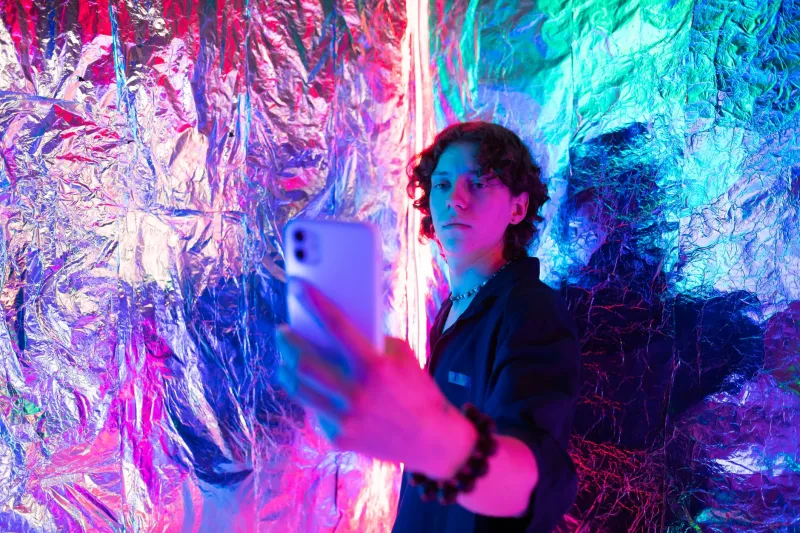
There's a certain kind of Instagram post you've seen a hundred times. The lighting is soft but not too polished. The caption starts with something like, "I almost didn't share this, but..." The person in the photo looks tired in a way that reads as relatable rather than haggard. The whole thing feels unfiltered. Except, of course, it isn't.
This is the authenticity trap—and if you're a working creative, designer, or anyone building a public-facing brand in 2024, there's a solid chance you've either fallen into it or you're standing right at the edge.
How "Real" Became a Competitive Advantage
Somewhere in the last decade, the cultural conversation around creative work shifted. Audiences got exhausted by the glossy, the aspirational, the obviously-curated. They started craving something that felt human. And the market, being the market, responded accordingly.
Brands started hiring people who could "talk like a real person." Designers started showcasing their process sketches alongside final work. Artists began posting about rejection, creative blocks, and financial anxiety. None of this was inherently cynical. A lot of it was genuinely valuable—it normalized struggle, reduced isolation, and built real community.
But then something shifted again. Once rawness became a known engagement driver, it became a tool. And once it became a tool, it stopped being raw.
Now you've got a full ecosystem of people performing vulnerability at scale. The "I almost quit" post. The "this piece got rejected everywhere" thread that conveniently ends with a book deal announcement. The tearful behind-the-scenes video that's been color-graded and scored with acoustic guitar. It's not that these moments aren't real—sometimes they are. It's that they've been processed, timed, and deployed with the same strategic precision as any other marketing asset.
The Paradox Nobody Talks About
Here's the thing that makes this genuinely complicated: there's nothing wrong with being intentional about how you share your work or your story. Editing is part of communication. Choosing when and how to be vulnerable isn't automatically dishonest.
But the paradox is that the more you optimize your authenticity, the less authentic it actually is—and audiences, even if they can't name it, feel that. The uncanny valley doesn't just apply to CGI faces. It applies to emotional performance too. People have finely tuned detectors for when sincerity has been focus-grouped.
What this creates is a kind of arms race. Someone shares something genuinely messy and connects with people. Others notice the engagement, reverse-engineer the formula, and start producing their own "messy" content. The genuinely messy person ups the ante. And pretty soon, the whole genre collapses into a pile of strategically disheveled aesthetics and canned confessions.
For designers and artists specifically, this plays out in some particular ways. The "here's my sketchbook process" video that's been shot on a $2,000 camera with a ring light. The "I made this in one chaotic afternoon" piece that was actually iterated over three weeks. The "I don't know what I'm doing" energy that's been carefully calibrated to feel approachable without actually undermining your authority.
So What Does Real Vulnerability Actually Look Like?
This is where it gets harder to give a clean answer, because it's genuinely contextual. But there are a few markers worth thinking about.
Does it cost you something? Genuine vulnerability usually involves some actual risk—of judgment, of misunderstanding, of being seen in a way you can't fully control. If your "authentic" moment feels completely safe to share, it might be worth asking whether it's really vulnerability or just a vulnerability-shaped content piece.
Is it useful to the audience or to you? There's nothing wrong with sharing struggle in a way that builds your brand. But if the primary function of your openness is positioning—if the story you're telling is ultimately about how far you've come or how relatable you are—that's a different thing than sharing something because it might genuinely help someone else feel less alone.
Are you in control of the narrative the whole time? Real vulnerability means accepting that you don't get to manage every reaction. If you're sharing something "raw" but you've pre-written the framing so tightly that there's no room for it to land wrong, it probably isn't that raw.
The Case for Strategic Restraint
Here's an unpopular take: you don't actually owe anyone your unfiltered interior life, and pretending otherwise is its own kind of performance.
One of the side effects of the authenticity economy is a weird pressure to constantly disclose—to make your process visible, your doubts public, your failures into content. And that pressure can be genuinely damaging, both creatively and personally. Not every struggle needs to be a post. Not every rejection needs a redemption arc. Some things are just yours.
There's a version of creative integrity that looks less like radical transparency and more like quiet confidence in what you're making. You don't have to prove you're human by bleeding on the internet. Your work can speak for itself. The sketchbooks don't have to go public. The bad days don't have to be documented.
In fact, a little opacity can be its own kind of authenticity signal. When everyone is performing openness, the person who just... makes things and puts them out without a confessional thread attached starts to feel genuinely different.
Finding Your Actual Line
None of this means you should go full mystery-brand and never share anything personal. Connection matters. Story matters. The context around creative work often deepens how people experience it.
But it's worth asking yourself, periodically and honestly: Why am I sharing this? Not as a gotcha, but as a genuine check-in. Is it because it might help someone? Because it's part of a conversation you care about? Because it's just interesting? Or is it because you've noticed that this kind of post performs well and you're reverse-engineering the emotional texture of a previous hit?
You can usually tell the difference if you sit with it long enough. The stuff that comes from a real place tends to feel a little uncomfortable to share—not because it's overly personal, but because you're not totally sure how it'll land. The manufactured stuff tends to feel smooth. Pre-digested. Ready to go.
The authenticity trap isn't about being fake. Most people caught in it aren't consciously performing. It's about the slow drift that happens when you start optimizing something that was never meant to be optimized. Your realness is not a product. The moment you start treating it like one, you've already lost the thing people actually wanted.
Make the work. Share what feels true. Let some things stay private. That's probably enough.