When Watching Too Much Good Work Breaks Your Own
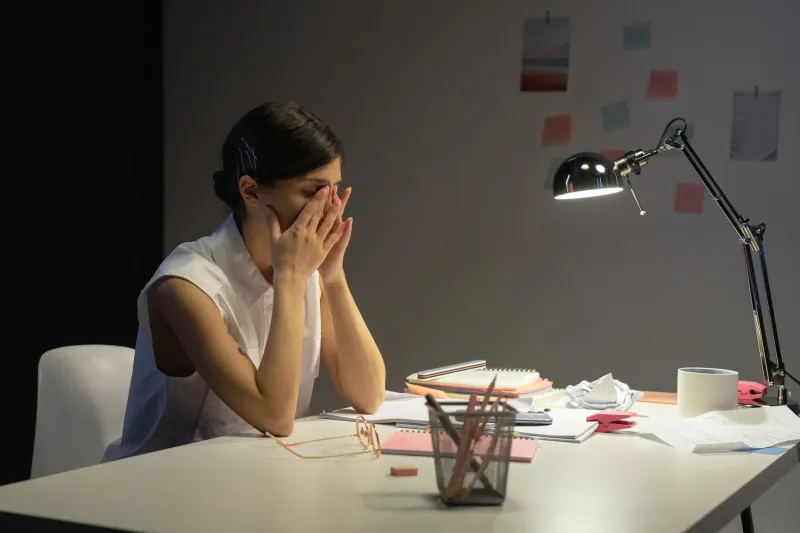
There's a weird trap that nobody warns you about when you start getting serious about your craft: the more great work you consume, the harder it gets to make anything yourself. This isn't imposter syndrome. It's something quieter and more structural — a slow inversion of the very standards that were supposed to make you better.
Ira Glass called it the taste gap. You know the quote. But what he didn't fully unpack is what happens after you close that gap. Because for a lot of creators, the problem doesn't go away once the skill catches up. The taste keeps climbing. The bar keeps rising. And somewhere along the way, consuming premium work stops being a source of fuel and starts functioning like a ceiling.
The Pyramid Gets Flipped
Here's a useful mental model: think of your creative standards as a pyramid. At the base, broad and stable, sits your instinct — the raw, unfiltered thing you reach for before anyone taught you what "good" looked like. In the middle is your developing judgment, shaped by exposure and feedback. At the top, narrow and precise, is your refined taste — the part of you that can immediately clock why a Coen Brothers edit works, or why a particular typeface choice in a title sequence feels off by half a point.
The problem is that most creators, as they get more serious, accidentally flip that pyramid. Refined taste becomes the foundation. Every creative decision gets filtered through it first. And the instinctive, generative base — the part that actually makes things — gets squeezed up into a tiny point at the top, rarely accessed, treated as the least trustworthy layer.
You end up building from the most restrictive part of yourself instead of the most expansive one.
Taste That Educates vs. Taste That Paralyzes
Not all taste works the same way. There's a version of aesthetic judgment that opens doors — it helps you understand why something lands, gives you language for what you're going for, and expands the range of moves available to you. Call this educating taste. It's additive. It makes you more fluent.
Then there's the other kind. The kind that mostly tells you what's wrong. That scans everything you make against a mental database of superior references and returns a verdict before the work even has a chance to breathe. This is paralyzing taste, and it's remarkably easy to develop without noticing.
The difference between the two is less about how much you've consumed and more about the relationship you've built with what you've taken in. Educating taste stays curious. Paralyzing taste turns comparative. One asks "what's interesting here?" The other asks "does this measure up?"
If you've spent the last two years deep in a steady diet of prestige TV, award-winning design work, and critically acclaimed everything — and your own output has gotten slower, more hesitant, or more imitative — there's a decent chance your taste has crossed the line from tool to gatekeeper.
The Mistake of Mistaking Consumption for Development
There's a seductive logic that goes something like this: if I watch enough great films, I'll understand what makes a great film. If I study enough brilliant design, my own design instincts will sharpen. And there's some truth to it. Exposure matters. Reference matters. You can't develop vocabulary in a vacuum.
But passive consumption and active development aren't the same thing, and the entertainment landscape we live in makes it incredibly easy to confuse the two. Streaming has given us essentially unlimited access to the best work ever made in almost every medium. That's remarkable. It's also a trap if you let it replace the messier, less comfortable work of actually making things.
Watching five seasons of The Bear back to back gives you a very refined sense of what tightly directed, emotionally dense television feels like. It does not, on its own, give you a stronger sense of your own voice. Those are different projects. One is absorptive. The other is generative. And the generative one requires a kind of productive ignorance — a willingness to make something before you fully know what you're doing.
How to Flip the Pyramid Back
The fix isn't to consume less good work. That's the wrong lever. It's to deliberately change the order of operations in how you create.
Start before you reference. Whatever the project is, make a first pass before you look at anything else for inspiration. It doesn't have to be good. It just has to be yours. Get something on the page, on the canvas, in the timeline — before your taste has a chance to weigh in. This protects the instinctive layer and keeps it active.
Use references as conversation, not competition. When you do pull up that benchmark piece, go in with a specific question. "How did they handle the transition here?" "What's the pacing doing in this section?" Focused curiosity keeps taste in its educating mode. Vague, ambient comparison is what tips it into paralysis.
Build a reference library that includes work you love for weird reasons. The stuff that's technically imperfect but emotionally true. The indie album with the lo-fi production that still hits. The low-budget short film that does something the prestige version never could. This isn't about lowering your standards — it's about reminding yourself that the range of what can work is much wider than the narrow band of "premium" content suggests.
Make things that are allowed to be bad. Not everything needs to be portfolio-ready. Assign yourself projects with no audience and no stakes. The goal is to keep the generative muscle loose and used, so it doesn't atrophy under the weight of your own judgment.
The Real Job of Great Taste
Here's the reframe worth sitting with: taste, at its best, is supposed to serve the work — not judge it into nonexistence. The point of developing strong aesthetic judgment is to make more interesting things, not fewer things that are less embarrassing.
When you flip the pyramid back — when instinct is the broad, stable base and refined taste is the precise tool you reach for at specific moments — creative output tends to open up. Things get made. Some of them are rough. Some of them surprise you. And occasionally, one of them is better than anything you could have planned your way into.
That's not a coincidence. That's the pyramid working the way it was always supposed to.